
2 Best Ball: four golfers, two scores.
Four golfers, two scores. Everybody plays their own ball, the two worst on each hole get thrown out, and the team lives with what's left.
Four golfers, two scores. Everybody plays their own ball, the two worst on each hole get thrown out, and the team lives with what's left.
Four players make a team. Everybody plays their own ball for the full eighteen. On each hole, the team takes its two lowest scores and throws the other two away.
That's the whole format. It's stroke play — you're adding up a number and comparing it to every other team in the field — but with two-thirds of the pain removed. Somebody makes a mess of the 7th and it simply doesn't matter, provided two of their partners played it.
Which is why it's the format most member-guests, charity days and buddies trips end up on. A scramble hides weak players entirely and a straight stroke play round exposes them brutally. 2 Best Ball sits in between: everyone plays a real round, and nobody sinks the team with one hole.
It's a Stroke Play game in GolfApp. You're picking Foursome vs Field for the team size and Double Best Ball for how many count. Choosing Pair vs Field instead gives you Net Best Ball with two-man teams.
Two screens. The first builds the field, the second decides what it's worth.
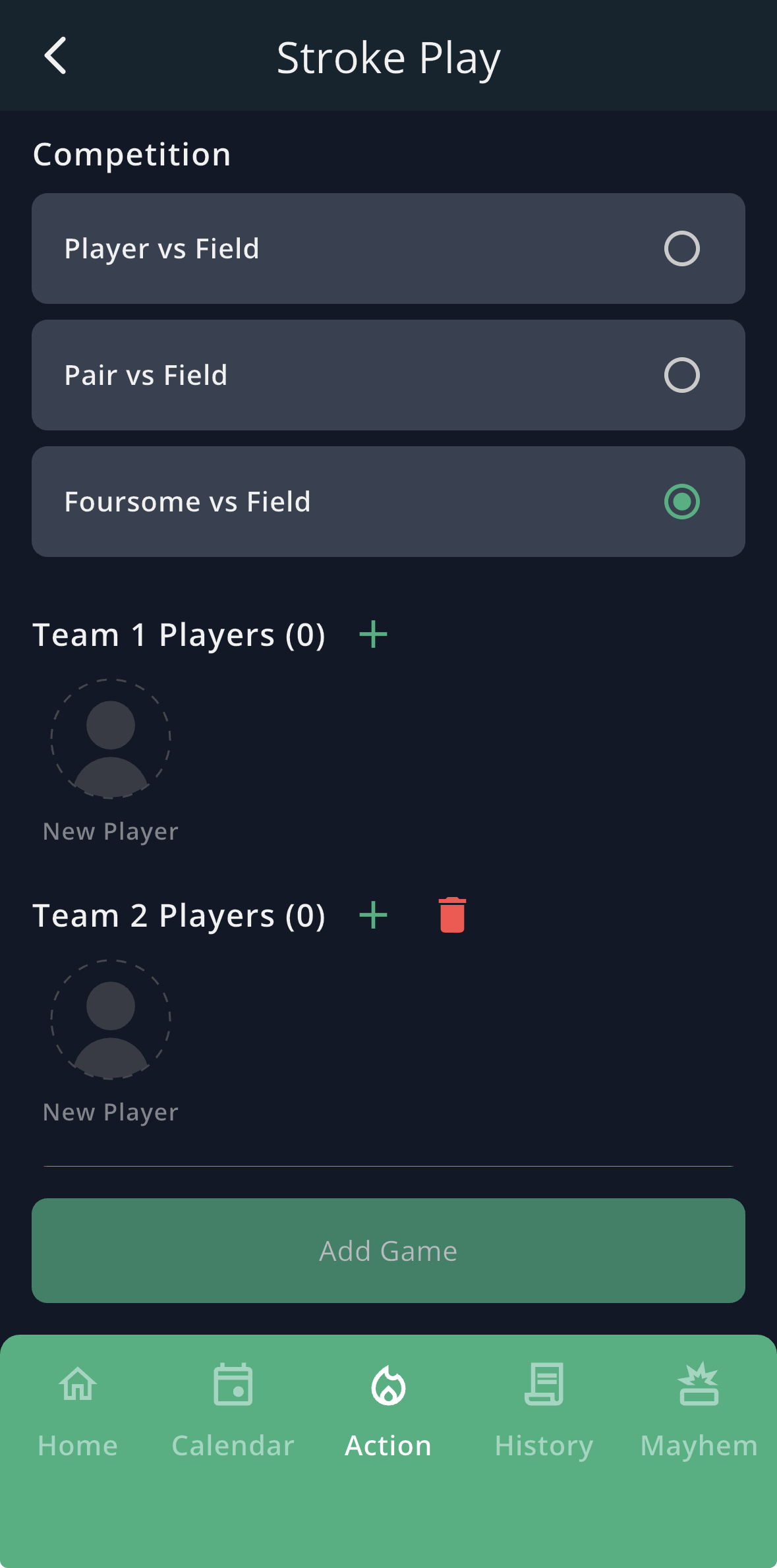
Teams don't have to be playing together. Build the whole field from one screen and let them tee off wherever the starter puts them.
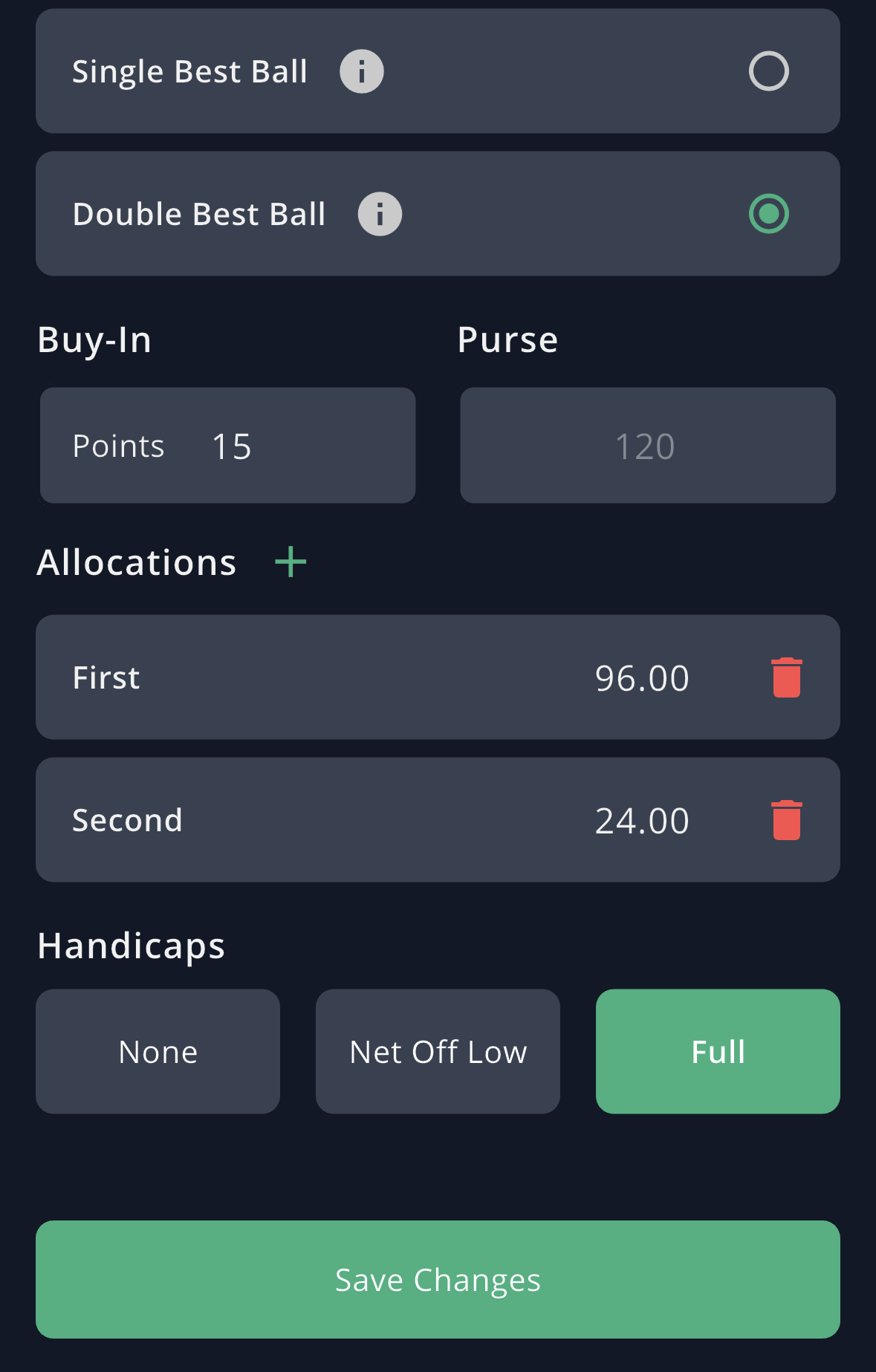
Don't skip the handicaps. Full is the default, and it's what makes a mixed-ability field worth playing.
This is the thing a paper card can't do. Everyone enters their own score and GolfApp works out which two made the team total — then outlines them right on the card so nobody has to take it on faith.
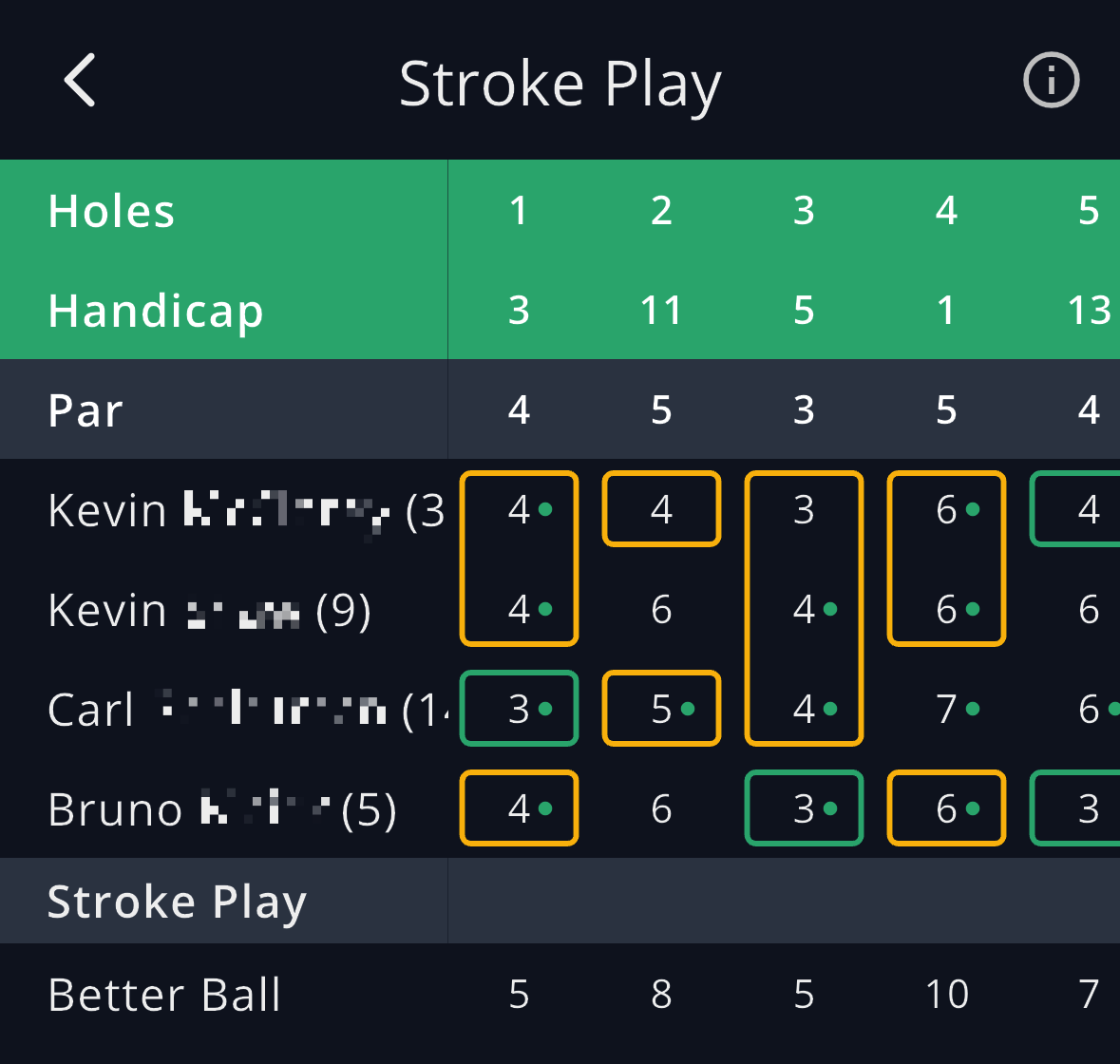
The top of the card carries the hole number, the stroke index and the par, so you can see where the strokes fall. Each player's handicap sits beside their name and a dot marks the holes they're getting one on — which matters here, because a net score can quietly become one of the two that count.
Underneath the players, the Better Ball row is the team's number for that hole. That's the figure feeding the leaderboard.
2 Best Ball is a field format, so the interesting question is never just your own score — it's whether the group two hours behind you is about to beat it.
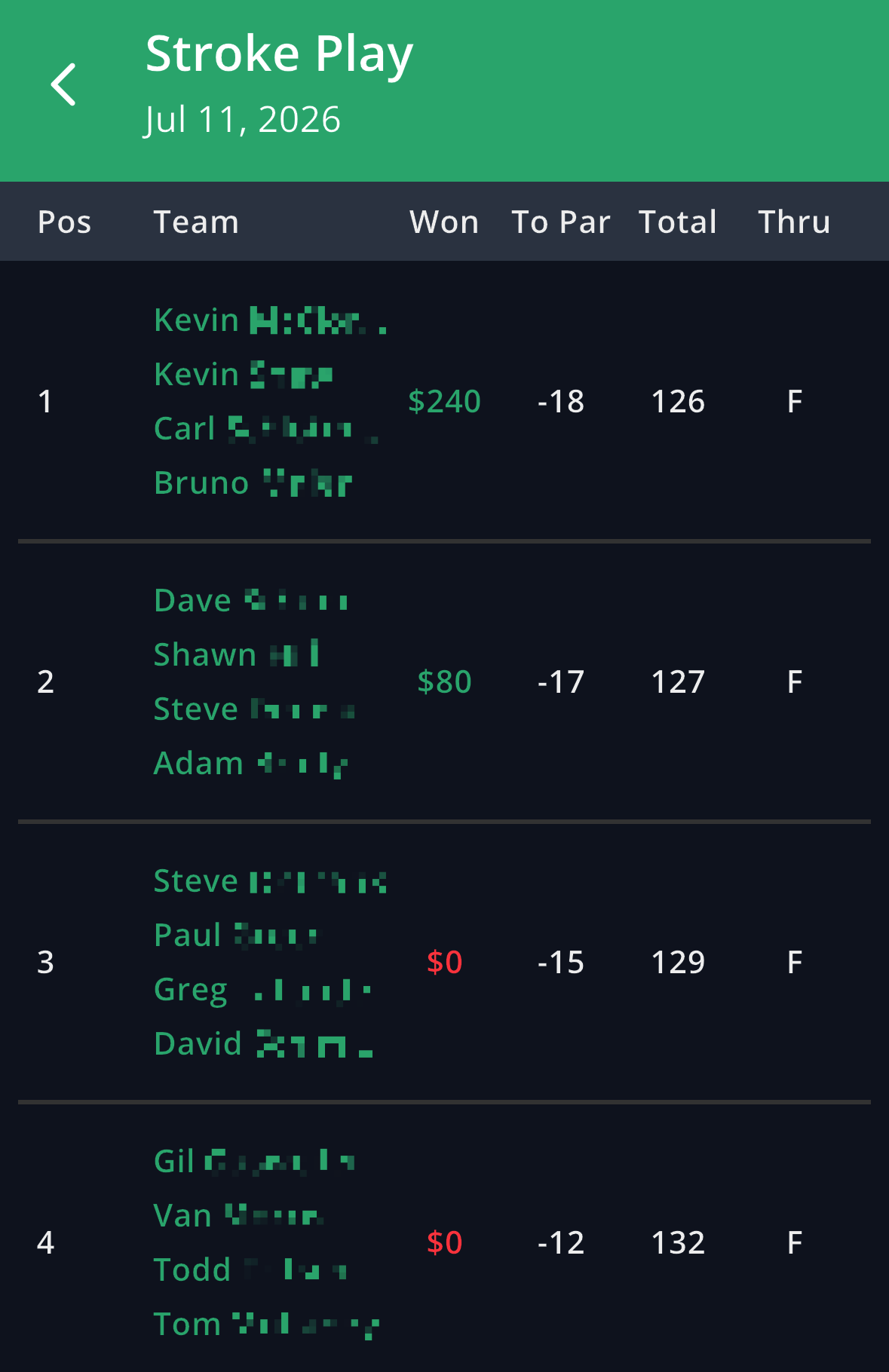
Teams outside the paid positions show $0. Blunt, but it means nobody is doing arithmetic in the parking lot to work out whether they finished in the money.
Because Thru is right there, a leaderboard mid-round actually means something. A team sitting on a good number through 12 is a very different thing from a team that has posted it through 18, and everyone can see which is which.
When the last group signs, the purse splits itself according to the allocations you set, and everyone settles up — with a Venmo request a tap away.
2 Best Ball is the main event at a lot of outings, but it doesn't have to be the only thing going on. It scores off the raw scores every player is already entering, which means other games stack on top of it for free.
Put a Skins game across the entire field so every hole still pays somebody. Run a Nassau against your buddy in the group behind you. Keep a Scotch game going inside your own foursome. Same scorecard, four games, one settle-up at the end.
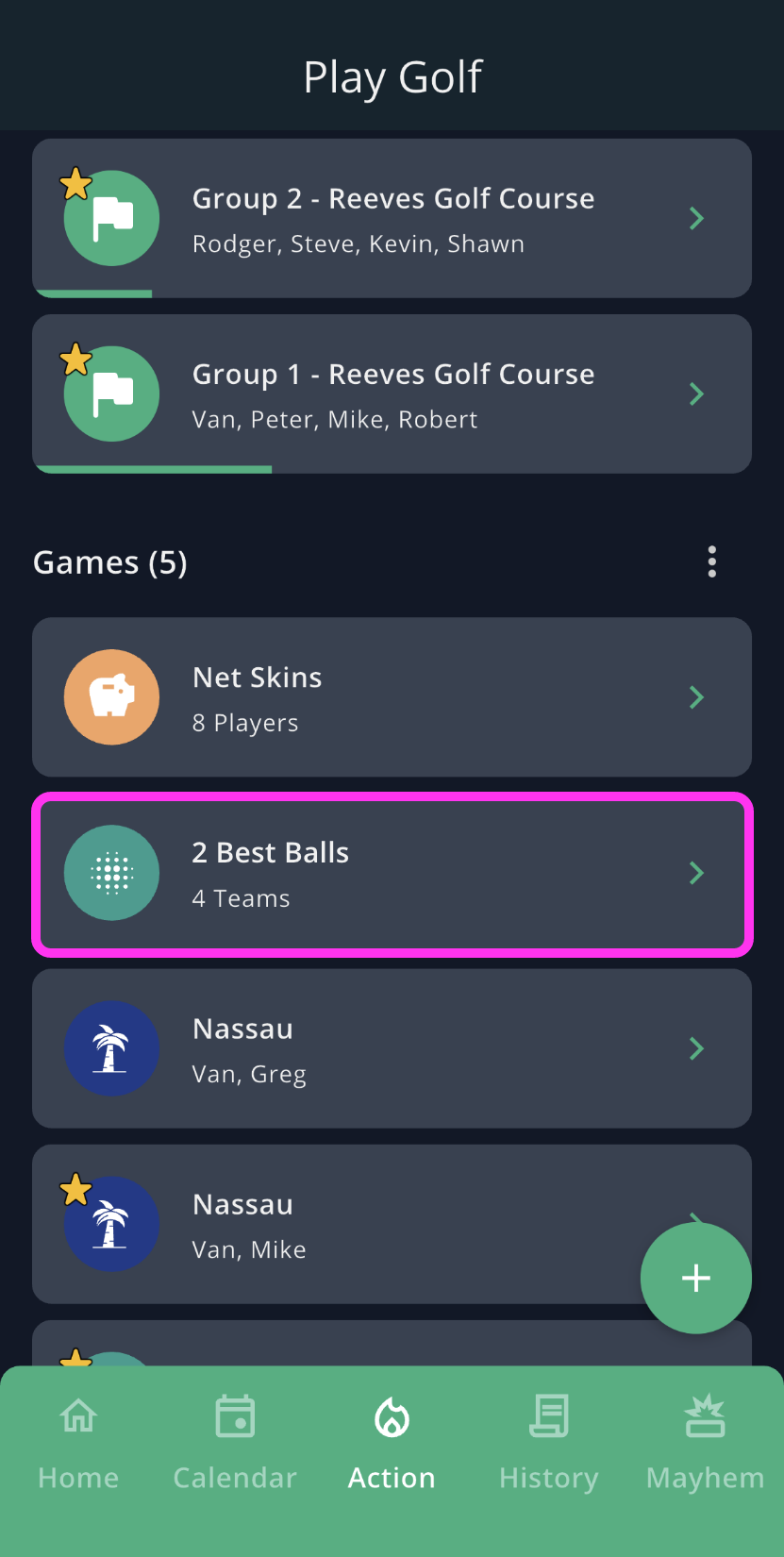
That's a real round: two foursomes at the same course, a Skins game spanning all eight players, the team event across four teams, and individual Nassaus running between whoever wanted action. Nobody entered a score more than once.
See running games across multiple groups for how the pieces fit together on a big day.
A four-man team stroke play format where only the two lowest scores on each hole count toward the team's total. The other two are thrown out. Add up eighteen holes of two-score totals and that's your team's number against the rest of the field.
In a scramble everybody hits from the best shot and the team plays a single ball. In 2 Best Ball everyone plays their own ball all the way through — you just don't count the two worst scores on each hole. It's a real round of golf for all four players, not a shared one.
Same idea, different team size. Net Best Ball is two-man teams counting the lower of two scores. 2 Best Ball is four-man teams counting the lower two of four. Both are set up as Stroke Play in GolfApp — you're choosing between Pair vs Field and Foursome vs Field.
They do by default. GolfApp offers None, Net Off Low, and Full, and Full is what a 2 Best Ball event normally runs on so mixed-ability teams can compete. The scorecard marks the holes each player is stroking on.
You set a buy-in, which builds the purse, then split that purse across finishing positions. Pay first and second, pay the top three, pay it however your event does — you add as many allocations as you want and GolfApp settles them when the round is finished.
They finish where they finish and win nothing. The leaderboard shows every team's position, total, and payout, so a team in third with only two paid positions sees $0 next to their name. No ambiguity at the scoring table.
Yes, and this is the part that ends arguments. The scorecard outlines the scores that made the team total on every hole, with the team's number for that hole on its own row underneath.
As many as your event has. 2 Best Ball is built for a field — every team is scored against every other team, and the leaderboard covers the whole outing rather than just your foursome.
Yes. Teams don't have to tee off together or stay together. A hole is scored as soon as the players have entered a score for it, so the leaderboard is current for the whole field no matter where anyone is on the course.
Yes. 2 Best Ball scores off the raw scores everyone is already entering, so a Skins game across the whole outing or a Nassau inside your own foursome runs right alongside it. Same scores, several games, one settle-up.
GolfApp does, free for life — team setup, handicaps, which balls count, the purse split, and a live leaderboard for the field, with no subscription or premium tier.
 Skins
Skins Every hole is its own prize. Runs across the whole outing, right alongside your team game.
 Nassau
 Three bets in one round — and it can run against someone in a different group entirely.
Every format GolfApp scores, from head-to-head matches to tournament fields.
How one game runs over an outing with four foursomes in it.
Free for life. No subscription, no premium tier.
Download for Free